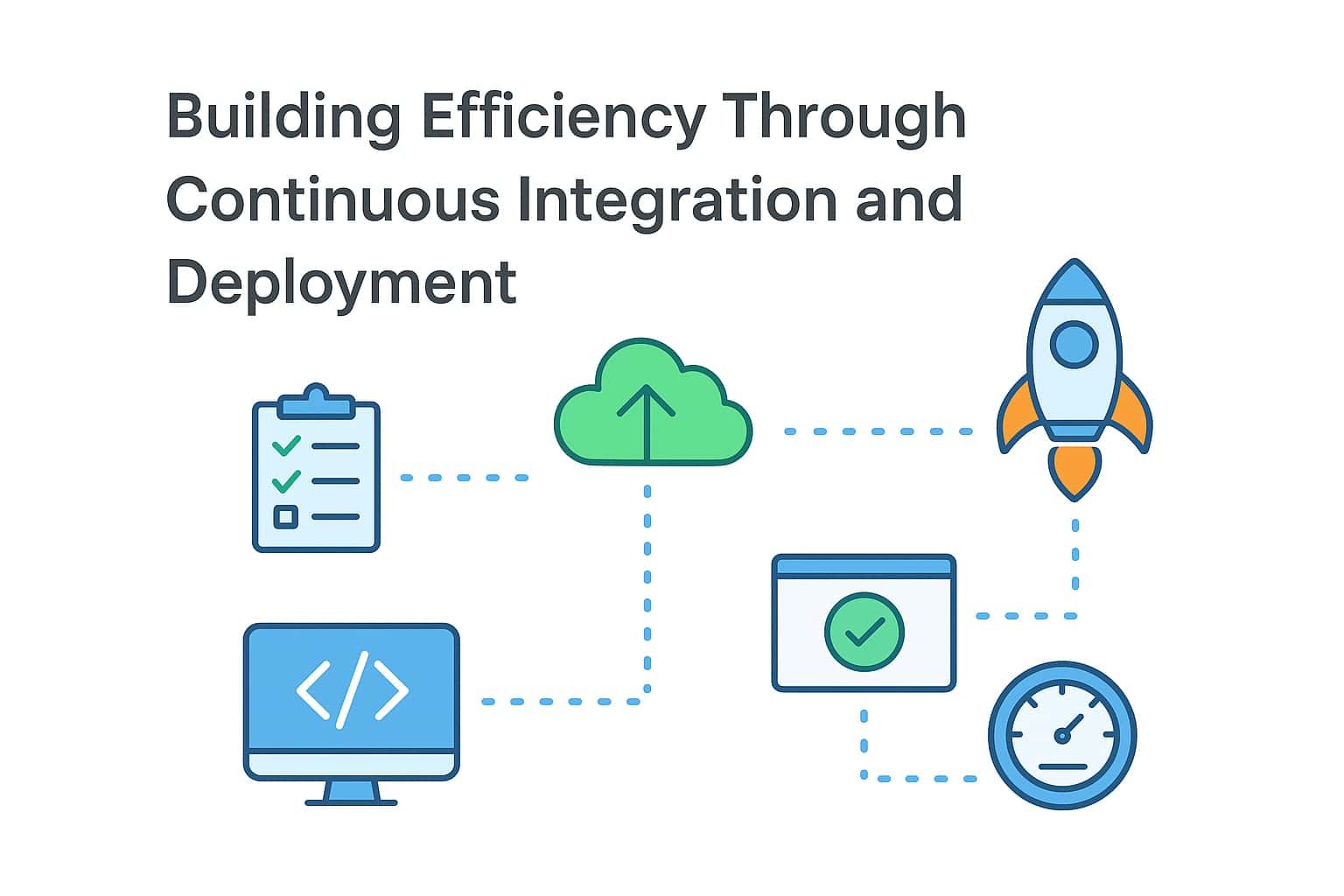
In today’s fast-paced world of software engineering, speed and reliability have become essential pillars of success. Users expect seamless updates, quick bug fixes, and reliable software experiences across devices and platforms. Traditional software release cycles, often stretched over months, can no longer meet these expectations. This is where Continuous Integration (CI) and Continuous Deployment (CD) — collectively known as CI/CD — come into play.
CI/CD transforms how development teams build, test, and deliver software. Instead of releasing infrequent, large updates, teams continuously integrate changes into the main codebase, automatically test them, and deploy improvements rapidly and safely. This approach not only enhances productivity but also reduces human error, accelerates innovation, and ensures higher software quality.
The concept of CI/CD is not new, but it has evolved into a cornerstone of modern DevOps practices. It represents the automation of the entire software delivery lifecycle, ensuring that code moves smoothly from a developer’s machine to production.
Understanding Continuous Integration
Continuous Integration (CI) refers to the practice of merging code changes frequently — often multiple times per day — into a shared repository. Each integration triggers an automated build and test process, allowing teams to detect problems early. The goal is to identify and fix integration issues quickly before they compound into larger, harder-to-debug problems.
Before CI became widespread, software teams often worked in isolation for long periods, only integrating their code at the end of a project. This created the infamous “integration hell,” where conflicting dependencies, broken builds, and unexpected errors surfaced all at once. CI eliminates this by ensuring every change is validated automatically.
A typical CI process includes:
- Source Code Commit: Developers push changes to a version control system like Git.
- Automated Build: A CI server (e.g., Jenkins, GitLab CI, CircleCI, or GitHub Actions) compiles and builds the project.
- Automated Tests: Unit, integration, and static code analysis tests verify the quality and functionality of the code.
- Immediate Feedback: If something fails, developers receive instant notifications to fix issues before merging further.
The benefits are substantial: fewer bugs, faster feedback, and improved collaboration. As Martin Fowler, one of the pioneers of modern software development practices, famously emphasized, “Continuous Integration doesn’t get rid of bugs, but it does make them dramatically easier to find and remove.” This statement perfectly summarizes why CI is a cornerstone of sustainable software engineering — it promotes a continuous state of readiness.
The Power of Continuous Deployment
While Continuous Integration ensures that code changes are built and tested continuously, Continuous Deployment (CD) takes the next step by automating the delivery of those changes to production environments.
In a Continuous Deployment pipeline, every validated change is automatically deployed to production without manual intervention. The process relies heavily on automated testing, monitoring, and rollback mechanisms to guarantee that only safe, stable updates reach users.
Here’s how a typical CD pipeline works:
- Build and Test: Code passes through the CI pipeline, ensuring it’s functional and stable.
- Staging Deployment: The change is deployed to a staging environment identical to production, where end-to-end tests are performed.
- Automated Production Release: If all tests pass, the system deploys the change directly to production.
- Monitoring and Rollback: Continuous monitoring tools track system performance and errors. If anomalies occur, automated rollback scripts revert to the previous stable version.
This level of automation enables teams to release multiple times a day — a huge improvement from the traditional quarterly or monthly cycles. Companies like Netflix, Amazon, and Google have adopted CD pipelines that allow thousands of updates per day without disrupting user experiences.
Continuous Deployment offers clear advantages:
- Faster Time to Market: Features and bug fixes reach users instantly.
- Reduced Deployment Risk: Small, frequent updates are easier to test and rollback.
- Improved Collaboration: Developers, testers, and operations teams align around a shared pipeline.
- Customer Satisfaction: Users benefit from quick enhancements and improved stability.
The shift to CD isn’t just about speed; it’s about creating a development culture that values reliability, consistency, and accountability.
Key Components of an Effective CI/CD Pipeline
Building a robust CI/CD pipeline involves more than just automation. It requires careful design, tool selection, and continuous improvement. Each component plays a specific role in ensuring code flows safely and efficiently from development to production.
1. Source Control Management (SCM)
The foundation of CI/CD begins with a strong version control system like Git. It enables developers to collaborate, manage branches, and track changes seamlessly. Tools like GitHub, GitLab, and Bitbucket offer built-in CI/CD integrations for smoother automation.
2. Automated Builds
Build automation tools compile code, run static analysis, and package artifacts for testing or deployment. Automation reduces manual errors and ensures reproducibility across environments.
3. Automated Testing
Testing is the heart of CI/CD. Automated tests — from unit and integration to end-to-end — guarantee that each change meets quality standards. Frameworks like JUnit, Selenium, and Cypress enable developers to validate every feature automatically.
4. Continuous Deployment Tools
Deployment automation tools such as Jenkins, Argo CD, Spinnaker, and GitHub Actions manage the transition from staging to production environments. They ensure zero-downtime releases and safe rollbacks when necessary.
5. Infrastructure as Code (IaC)
With tools like Terraform, Ansible, or Pulumi, infrastructure can be version-controlled and deployed automatically alongside application code. This ensures consistency between development, testing, and production environments.
6. Monitoring and Feedback Loops
Observability is essential for maintaining confidence in CI/CD pipelines. Tools such as Prometheus, Grafana, and Datadog provide real-time insights into performance and failures. These feedback loops allow continuous improvement in both the system and process.
A well-engineered CI/CD pipeline integrates all these components seamlessly, ensuring that automation and human oversight work hand in hand.
Overcoming Common Challenges in CI/CD Implementation
While the benefits of CI/CD are undeniable, successful implementation requires overcoming several practical challenges. Many organizations struggle not with the concept, but with execution.
1. Test Reliability and Coverage
Automated testing is only as good as the tests themselves. Flaky tests — those that intermittently fail for non-deterministic reasons — can erode confidence in the CI/CD process. Investing in high-quality tests and maintaining test suites regularly is crucial.
2. Cultural Resistance
CI/CD is as much about people as it is about technology. Teams accustomed to manual processes may initially resist automation. A successful transition requires building a DevOps culture of trust, transparency, and shared ownership.
3. Tool Overload
With the abundance of CI/CD tools available, it’s easy for teams to adopt too many technologies without proper integration. Standardizing the toolchain and automating workflows prevent inefficiency and confusion.
4. Security and Compliance
Automation can unintentionally introduce security risks if not properly controlled. Integrating DevSecOps principles — embedding security checks directly into the CI/CD pipeline — ensures compliance and protects against vulnerabilities.
5. Managing Complexity at Scale
As systems grow, so do the challenges of managing dependencies, microservices, and distributed environments. Effective orchestration, containerization (via Docker), and cluster management (via Kubernetes) help handle complexity gracefully.
Addressing these challenges requires a blend of technical discipline, leadership support, and continuous learning. The organizations that succeed are those that treat CI/CD not just as a toolchain, but as a mindset.
The Cultural Shift: Collaboration and Continuous Improvement
At the heart of CI/CD lies a powerful cultural transformation. Development and operations teams, once separated by rigid workflows, now collaborate seamlessly under the DevOps philosophy. This culture emphasizes shared responsibility, automation, and feedback.
Continuous Integration encourages developers to take ownership of code quality, while Continuous Deployment empowers teams to deliver with confidence. Together, they foster a rhythm of continuous improvement — where small, incremental changes replace massive, risky releases.
Moreover, CI/CD enables faster innovation. By removing bottlenecks in delivery, developers can experiment more freely, gather feedback rapidly, and respond to market needs in real time. This agility gives organizations a competitive edge in an era where user expectations evolve constantly.
Ultimately, CI/CD is not just an engineering process — it’s a mindset of continuous progress, built on automation, collaboration, and accountability.
Conclusion
Continuous Integration and Deployment have redefined how modern software is built and delivered. They replace outdated release cycles with automation-driven, continuous workflows that promote reliability, quality, and speed.
CI/CD empowers teams to detect problems early, deploy changes confidently, and continuously improve through feedback. When properly implemented, it creates an engineering culture that balances agility with stability — where innovation happens safely, and excellence becomes repeatable.
In the fast-evolving world of software, CI/CD is not just a best practice; it’s a necessity. The organizations that embrace it aren’t merely deploying faster — they are engineering smarter.